Against the backdrop of the Chimbel villagers’ successful efforts to save Toyyar Lake and the ongoing rampant conversion of green land in Goa, the award-winning Konkani film ‘Amori’ was recommended for re-screening across the state, particularly for students.
This sentiment was expressed by the audience during a post-screening discussion on the opening day of the four-day ‘Prashanti Film Festival’ at ManoShobha Kalaghar in Loliem, Canacona.
Directed by Dinesh Bhonsle, the film won the National Award in 2017. It powerfully portrays the efforts of both older and younger generations to save their village lake, as well as the nexus between politicians, Communidades, and the builder lobby.
Notably, the lake featured in the film a decade ago is Toyyar Lake of Chimbel, which became the focus of a real-life agitation by villagers this year.
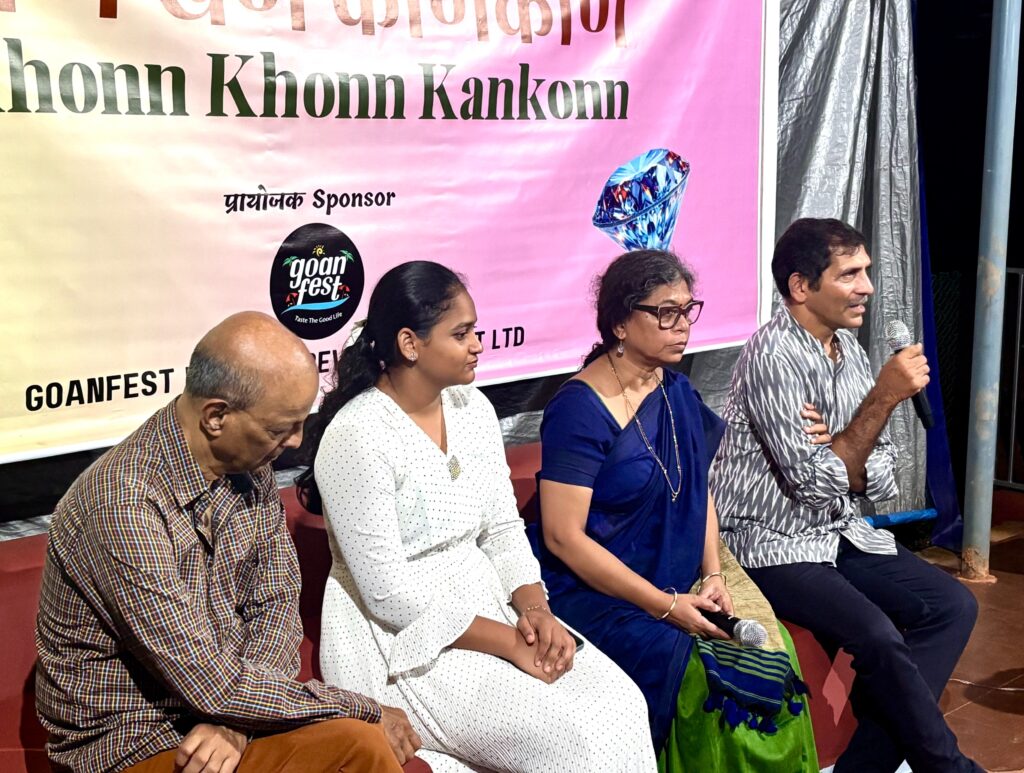
‘Amori’ Director Dinesh Bhonsle (extreme right) speaking at the Q&A session at ‘Prashanti Film Fest’ at ManoSobha Kalaghar. From Left: Producer Shubert Cota, Shayana Mirashi and Prashanti Talpankar

The proposal for state-wide screenings came from internationally acclaimed actor Prashanti Talpankar and Urvee Phaldesai, headmaster of Shri Nirakar High School, Mashem. The audience responded with strong applause.
Producer Schubert Cota announced that his production company would fully support the film if logistical arrangements were in place.
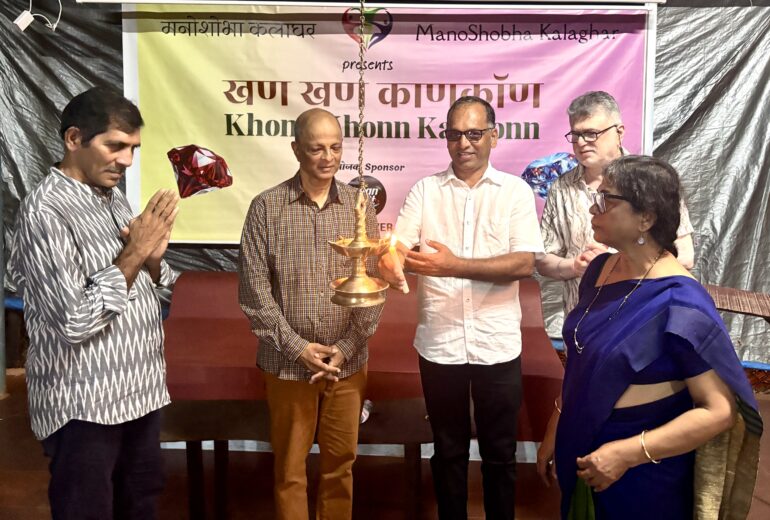
Ajay Lolayekar, Ponguinim ZP, inaugurated the Prashanti Film Festival. He commended ManoShobha Kalaghar’s efforts and shared that Loliem villagers have resumed cultivating paddy fields that had been barren for decades.


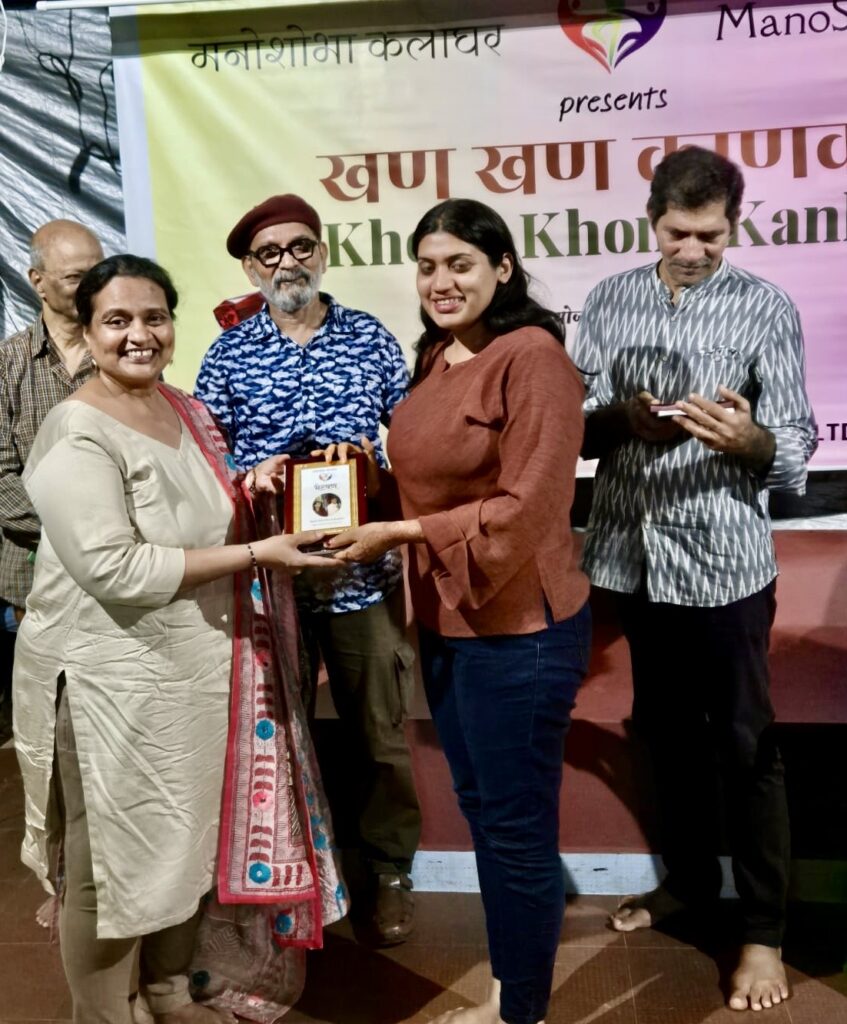
Sharmila Rao honoured Padma Bhat. theatre actor and moderator of the post-screening Q&A session of the ‘Amori’ film
Director Dinesh Bhonsle, Producer Schubert Cota, Art Director Querozito de Souza, and actors Prashanti Talpankar and Shyana Mirashi were present. Theatre actor Padma Bhat moderated the Q&A session.
The festival is also featuring award-winning Konkani films that address pressing social issues in Goan society. ‘Baga Beach’ by Laxmikant Shetgaonkar depicts the negative effects of beach tourism, while ‘Juze’ by Miransha Naik explores the exploitation of migrant labourers by a local slumlord. ‘Ancessao’ by Manguirish Bandodkar illustrates an elderly woman’s struggle with loneliness.