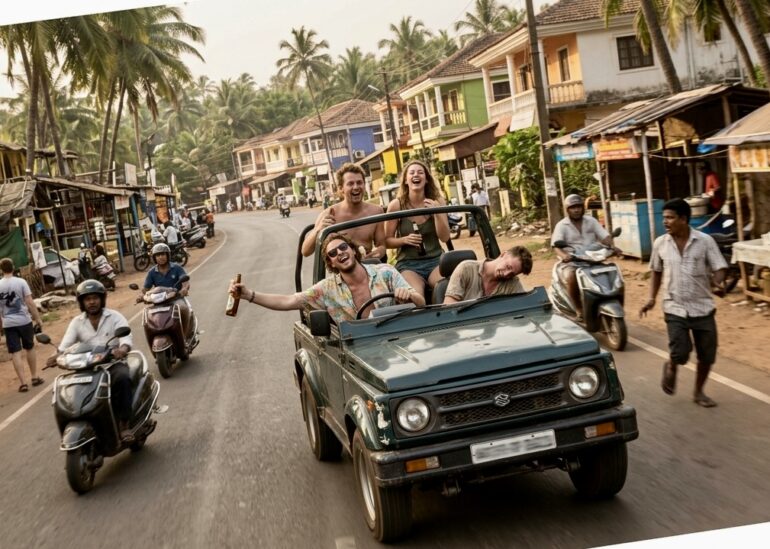
For decades, Goa was known not merely for its beaches and sunshine, but for something far more precious—a way of life. It was a land where people laughed easily, helped strangers without expecting rewards, tolerated differences, and lived at a pace that allowed them to notice sunsets, festivals, neighbours, and each other.
That Goa has not disappeared entirely. One still encounters the fisherman who greets everyone on the jetty, the shopkeeper who trusts customers, the village elder who remembers three generations of a family, and the ordinary citizen who earns an honest living and dreams simple dreams. They continue to embody the spirit that made Goa “special”.
Goa has also welcomed people from across India and the world. Many academics, professionals, artists, writers, and entrepreneurs chose Goa not merely as a destination but as a home. They enriched the state’s cultural and intellectual life. Thousands of workers from other states contributed their labour to building roads, homes, hotels, and other infrastructure. Their sweat and hard work became part of Goa’s growth story.
RACKLESSNESS OF WEALTH
But alongside these positive contributions emerged another phenomenon.
A section of the affluent class discovered Goa as a convenient extension of their wealth. They built second homes, established businesses, and imported not only their money but also, unfortunately, a culture of entitlement. Some seem to believe that prosperity comes with immunity from responsibility. Roads become race tracks. Rules become suggestions. Public spaces become private playgrounds.
The consequences are visible.

Every few weeks, headlines report another accident. Another family loses a loved one. Another drunk driver treats human lives as collateral damage. Another reckless act is explained away as an unfortunate incident, as though the laws of physics and common sense were somehow unexpected guests at the party.
Meanwhile, official responses often resemble a carefully choreographed performance. Committees are formed. Statements are issued. Promises are made. Enforcement drives appear briefly, like seasonal flowers, only to disappear once public outrage subsides.
One cannot help but admire the efficiency with which responsibility evaporates.
The recent spate of accidents has made the issue impossible to ignore. Within a single week, Goa witnessed two fatal accidents involving Thar vehicles, snuffing out innocent lives and leaving grieving families behind. Public outrage rises for a few days, social media erupts, condolences are offered, and then the cycle repeats itself.
UNCOMFORTABLE QUESTIONS
Perhaps it is time to ask uncomfortable questions.
Goa has marketed itself for decades as a destination for enjoyment, parties, alcohol, and unrestricted fun. Tourists are encouraged to “let loose” and “live freely.” If that is the reality we promote, should we not also acknowledge the risks that accompany it?
Is it prudent to hand over powerful vehicles and motorcycles to visitors who may be unfamiliar with Goa’s roads, traffic conditions, and local driving culture? Should the rent-a-car and rent-a-bike industry continue operating without stricter safeguards when lives are repeatedly being lost?
Predictably, the counter-argument arises immediately: What about the livelihoods of those who depend on this business?
That concern is valid. No one is suggesting that livelihoods be destroyed. But must public safety and economic survival always be presented as opposing choices? Can we not think creatively?
Why not encourage driver-assisted rental services? Why not create incentives for chauffeur-driven vehicles, especially for tourists who are likely to consume alcohol?
TOURISM AT THE COST OF HUMAN LIVES?
Families who come to enjoy Goa’s beaches, heritage, cuisine, and natural beauty could continue to rent vehicles. Those whose holiday plans revolve around late-night partying and drinking should not be allowed to transform public roads into gambling tables where the stakes are human lives.
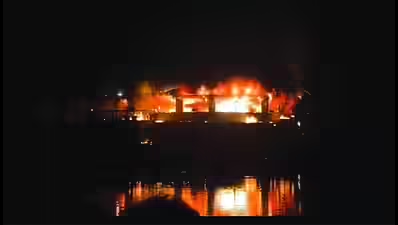
More importantly, drunken driving laws must cease to exist merely on paper and be enforced with unwavering seriousness. If a tourist knows that drinking and driving will lead to swift punishment, hefty penalties and loss of driving privileges, behaviour will change. Laws do not prevent crime merely by existing; they prevent it by being enforced.
The issue is not whether tourism should continue. It must. Tourism is the lifeblood of countless Goan families. The issue is whether convenience and profit should take precedence over human life.
Every time a reckless driver escapes accountability, every time enforcement is compromised, and every time commercial interests are placed above public safety, society sends a dangerous message: that a business transaction matters more than a human being.
It does not.
Goa today seems caught between two competing visions. One sees the state as a living community with a unique culture, ecology and social fabric. The other sees it primarily as a commodity—something to be bought, sold, developed, monetised and consumed.
Tourism has undoubtedly brought prosperity. It has generated employment, improved infrastructure and created opportunities. Yet tourism without regulation is like a feast without moderation: enjoyable for a while, destructive in the long run.
The irony is striking. Visitors come seeking Goa’s serenity while simultaneously contributing to its erosion. They come searching for peace but leave behind noise. They come for freedom but mistake it for the absence of responsibility.


Even more worrying is the gradual imitation of this culture by sections of local society. When wealth and aggression are rewarded while honesty and restraint are ignored, values begin to shift. The disease spreads beyond those who imported it.
CULTURE OF ARROGANCE
And so ordinary Goans find themselves squeezed from multiple sides—by unchecked development, by administrative lethargy, by powerful interests, and by a growing culture of arrogance that equates money with superiority.
The question is no longer whether Goa is changing. Change is inevitable. The question is whether Goa can preserve its soul as it changes.
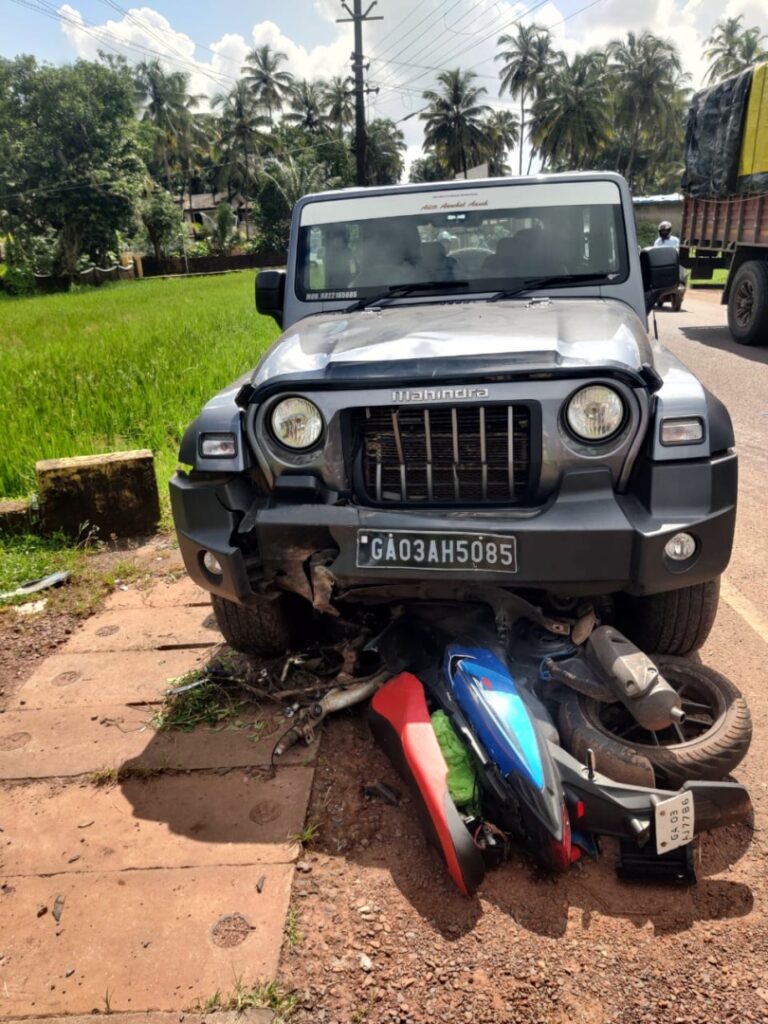
Will the government enforce laws impartially?
Will reckless driving finally attract consequences severe enough to deter offenders?
Will corruption be treated as a threat to public safety rather than an administrative inconvenience?
Will development be balanced with the protection of communities and lives?
Most importantly, will the voices of ordinary Goans be heard before they are drowned out by the sound of cash registers and luxury engines?
A rented vehicle can be replaced. A business model can be modified. A regulation can be redesigned. But a life extinguished on the road cannot be restored.
Goa does not need saving from outsiders. It needs saving from lawlessness, greed, indifference and the belief that money can purchase immunity.
The simple Goan still dreams with hope and works with dignity. The state owes its citizens more than condolences after every tragedy.
Paradise need not be perfect. But it should at least be safe for the people who call it home.