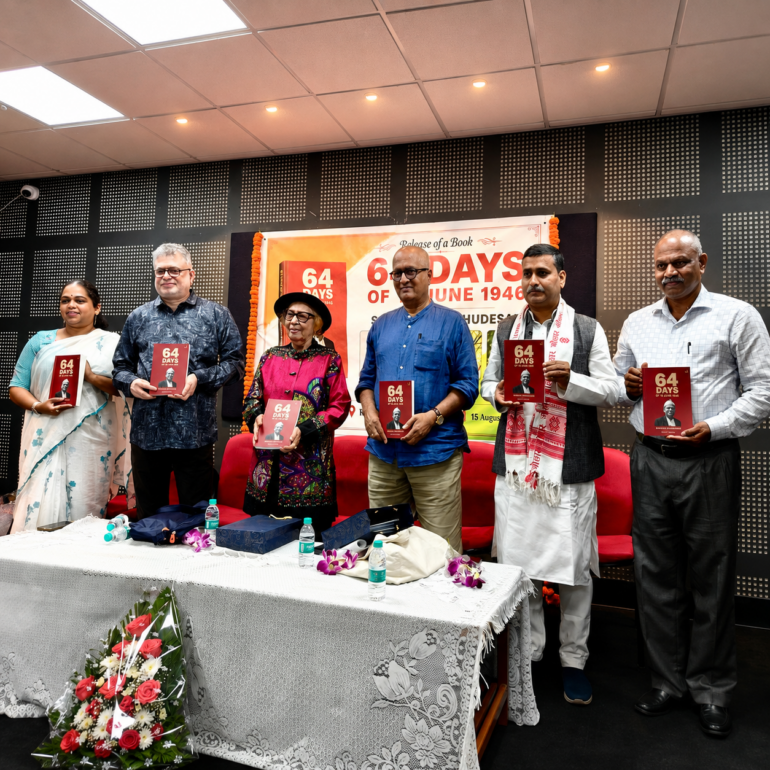
The newly released book, ‘64 Days of 18 June 1946’, delves into the notion that ‘history is contemporary politics’, rendering it highly relevant to our current political landscape. Esteemed political scientist Professor Dr Peter Ronald de Souza remarked that the book enhances social consciousness of the urgent need to revive a specific vision for Goa.
Dr de Souza shared these insights as the keynote speaker at the launch of journalist and author Sandesh Prabhudesai’s new English book, held in Margao on Independence Day. The event was graced by the presence of veteran freedom fighter Adv Libia Lobo Sardesai, who, at 102 years of age, released the book.
In his thought-provoking address, Dr de Souza noted, “Reading the captivating accounts of the grassroots mass movement that transpired over 64 days following the Goa Revolution Day of 18th June 1946, one cannot help but draw parallels with the recent youth uprising at Jantar Mantar in Delhi.”
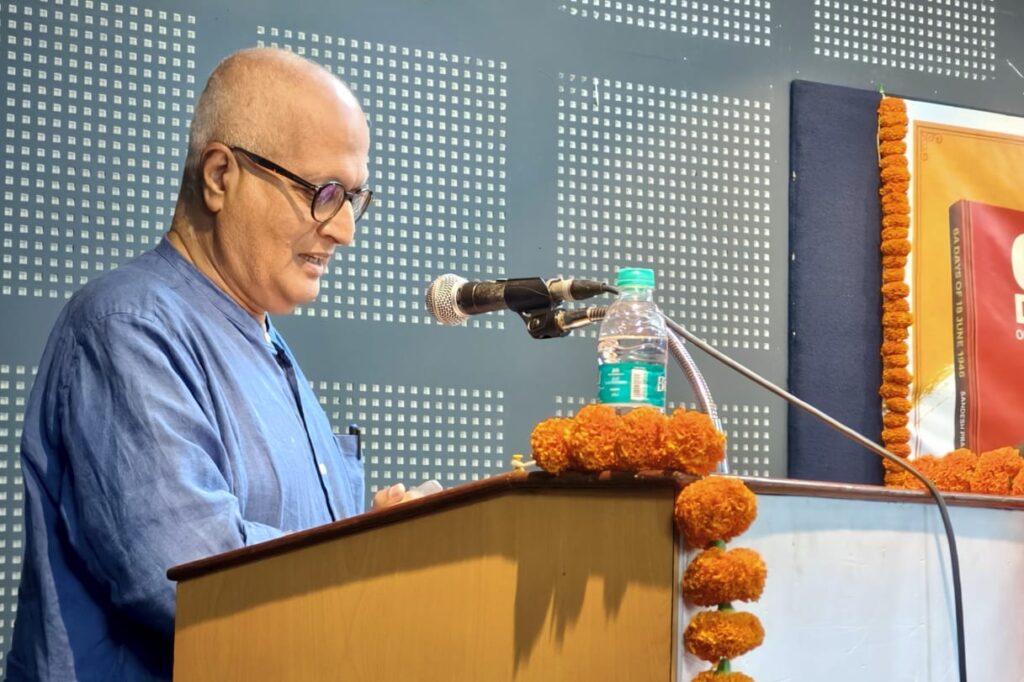 Prof Dr Peter Ronald de Souza
He highlighted the role of a cross-section of Goan society who stormed the streets when Dr Ram Manohar Lohia ignited the flame of revolution in Margao. Thousands of Goans, particularly students and young people aged 18 to 30, were propelled by a spirit of unity rooted in the belief that “we are all Indians,” transcending barriers of caste and religion. Dr de Souza pointed out that we are currently witnessing a similar uprising among the youth who are committed to protecting the secular ethos of our nation.
The book provides a window into the secular Goa and India of that time—a nation which embraced the freedom struggle against the fascist regime of Portuguese dictator Salazar, with people from diverse backgrounds coming together to chant ‘Jai Hind.’ With the ongoing attempts to undermine this secular vision of Goa and India today, Dr de Souza observed that this book seems to speak directly to those in power today.
The oppression and coercion suffered by young freedom fighters in Goa during the 1940s and their subsequent struggle for independence are strikingly mirrored in present experiences. Today, permission for public protests in venues such as Lohia Maidan or Azad Maidan is often denied. Furthermore, students involved in youth-led protests at Jantar Mantar face challenges, including the denial of their rightful scholarships and punishment for peacefully and democratically protesting. Dr de Souza lamented that tyranny remains a pervasive issue.
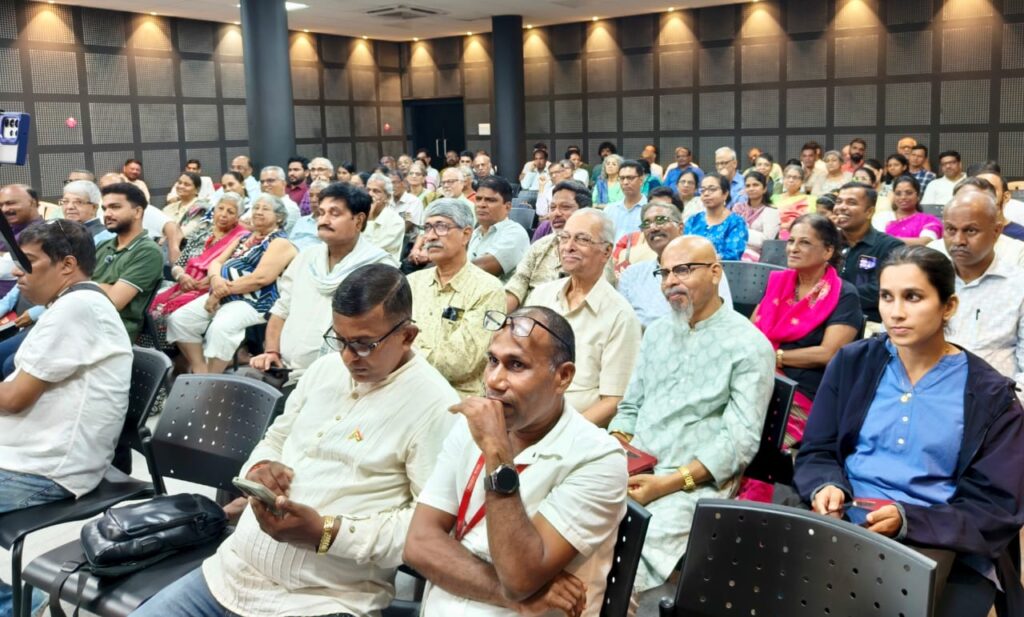 The audience
He emphasised the existence of a public sphere that stands between a citizen’s private life and the state apparatus, where collective discourse, discussions, meetings, and debates take place, raising counter-arguments and organising public movements that hold those in power accountable. The compelling narratives documented in this book illustrate how these processes evolved into a powerful movement, providing clear insights into our freedom struggle. Dr. de Souza encouraged readers to revisit this history and confront the falsehoods being propagated today.
He asserted that the events chronicled over the 64-day period following 18th June are not simply a chronological account; rather, they constitute a work deserving of national and global recognition, functioning as a historical novel, an extensive news report, a political pamphlet, and an academic and research essay. He expressed that reading this inspiring history instils a sense of pride in being a Goan.
Nehru’s dreams still unfulfilled: Libia
At the book launch, veteran freedom fighter Adv. Libia Lobo Sardesai recited—in Konkani—the historic “Tryst with Destiny” speech delivered by India’s first Prime Minister, Pandit Jawaharlal Nehru, on the eve of Independence Day, 15th August 1947.
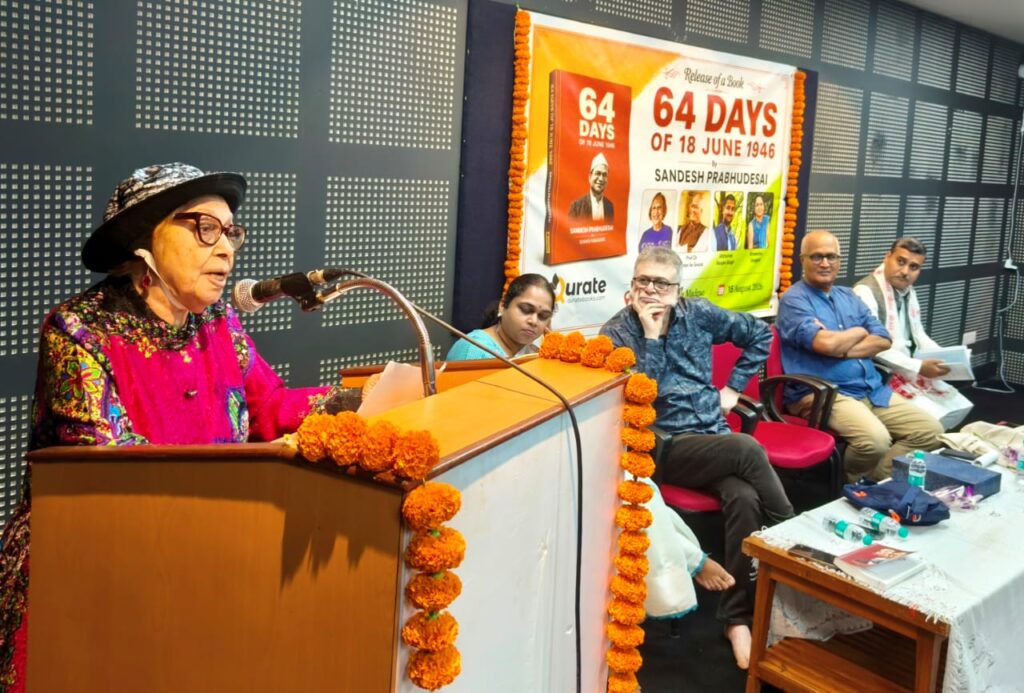 Adv Libia Lobo Sardesai speaking. Sitting: Anwesha Singbal, Sandesh Prabhudesai, Dr Peter de Souza & Abhishek Ranjan Singh
She urged all self-respecting Indians to revisit or listen to this speech amid the prevailing economic, social, and political situation the country faces today and to reflect on the role each individual should play as an Indian.
Book in Hindi & Konkani: Abhishek
Abhishek Ranjan Singh, Chairman of the Dr Rammanohar Lohia Research Foundation and a national-level journalist, announced that his foundation plans to publish translations of this significant book in Hindi and Konkani.


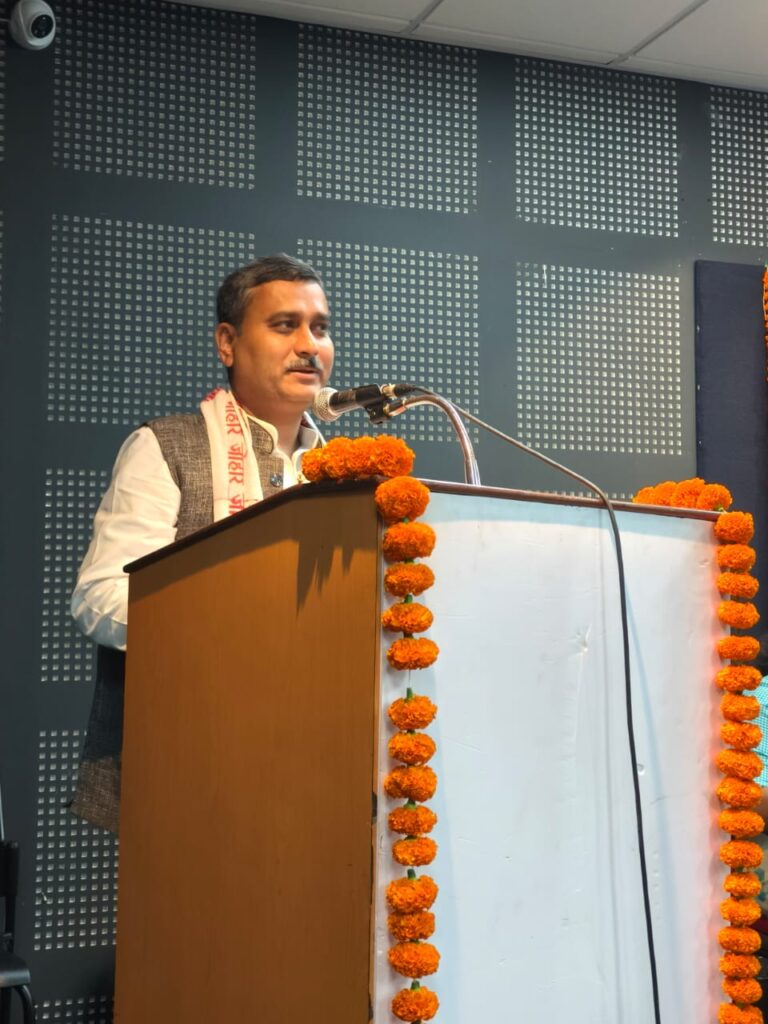 Abhishek Ranjan Singh
He pointed out that, due to censorship during Portuguese rule, information about Goa’s freedom struggle was primarily disseminated through newspapers in other parts of India. He proposed making these historical newspapers accessible in Goa to enrich the records of the freedom struggle and thereby benefit researchers.
Lohia Maidan belongs to the people: Sandesh
Journalist and author Sandesh Prabhudesai stated that public spaces such as Lohia Maidan in Margao and Azad Maidan in Panaji are the rightful venues for collective expression—they do not merely belong to the government. He remarked that government actions denying permission for public movements in these areas evoke memories of the repressive Salazar regime in Portugal.
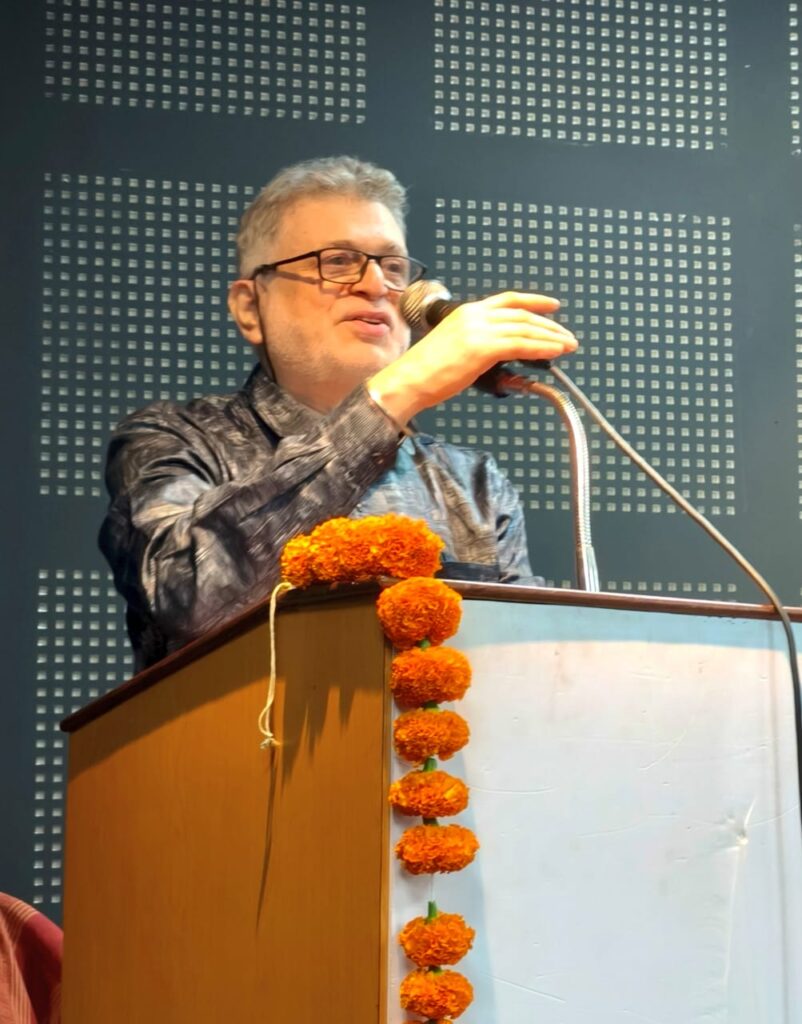 Sandesh Prabhudesai
He also observed that very little information regarding Goa’s freedom struggle is available through government departments and libraries in the state. Libia Lobo Sardesai has donated the daily news bulletins from the underground radio station she operated with her husband, Vaman Sardesai, between 1955 and 1961 to the Central Library. He suggested that these records be digitised to expand the collection. Additionally, he proposed that oral interviews with Goan freedom fighters—conducted by the Nehru Memorial Library in Delhi—be obtained and digitised as well to seek more authentic information on Goa’s freedom struggle.
The whole function was compered by Anwesha Singbal, a journalist and author. People from all walks of life attended the function, including children belonging to freedom fighters, young and old activists, students, professionals, and writers.